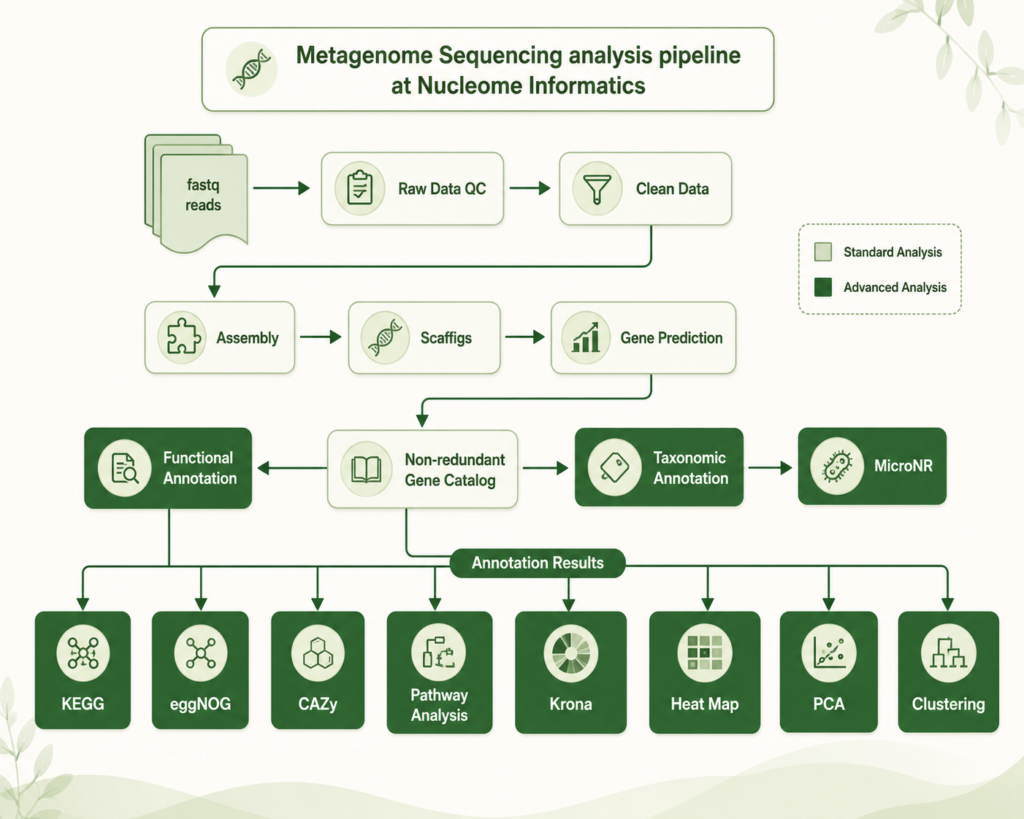
Shotgun Metagenome Sequencing

In metagenomics, genomes from environmental samples are analyzed without the prior isolation and cultivation of individual species, and, therefore, it is a powerful technique for studying microbial communities in their natural habitat, with a broad range of applications. The method enables microbiologists to evaluate bacterial diversity and detect the abundance of microbes in various environments. Shotgun metagenomics also provides a means to study unculturable microorganisms that are otherwise difficult or impossible to analyze. Unlike capillary sequencing or PCR-based approaches, next-generation sequencing (NGS) allows researchers to sequence thousands of organisms in parallel. With the ability to combine many samples in a single sequencing run and obtain high sequence coverage per sample, NGS-based metagenomic sequencing can detect very low abundance members of the microbial community that may be missed or are too expensive to identify using other methods. At Nucleome, our customers can rely on our expertise in NGS to help them explore the rich genetic repertoire of microbial communities, while also benefiting from our bioinformatics expertise to help identify the species, genes, and pathways represented in their samples. Nucleome provides metagenomic sequencing service with the Illumina NovaSeq platform and an assembly-first strategy, and our bioinformatics analyses provide:
  • Gene Predictions
  • Functional Annotations
  • Taxonomic Annotations

Why Choose Shotgun Metagenome Sequencing?

  • Comprehensive analysis of microbial communities
  • Study microorganisms directly from environmental samples
  • Detect rare and low-abundance microbial species
  • Analyze unculturable microorganisms
  • High-throughput sequencing using Illumina NovaSeq
  • Advanced bioinformatics and functional interpretation
  • Species, gene, and pathway-level insights

Additional Services

We also offer Metagenome Profiling and Metagenome-Assembled Genome Sequencing under our HiFi Metagenomics services on the PacBio platform. Please visit the PacBio service page for more information.