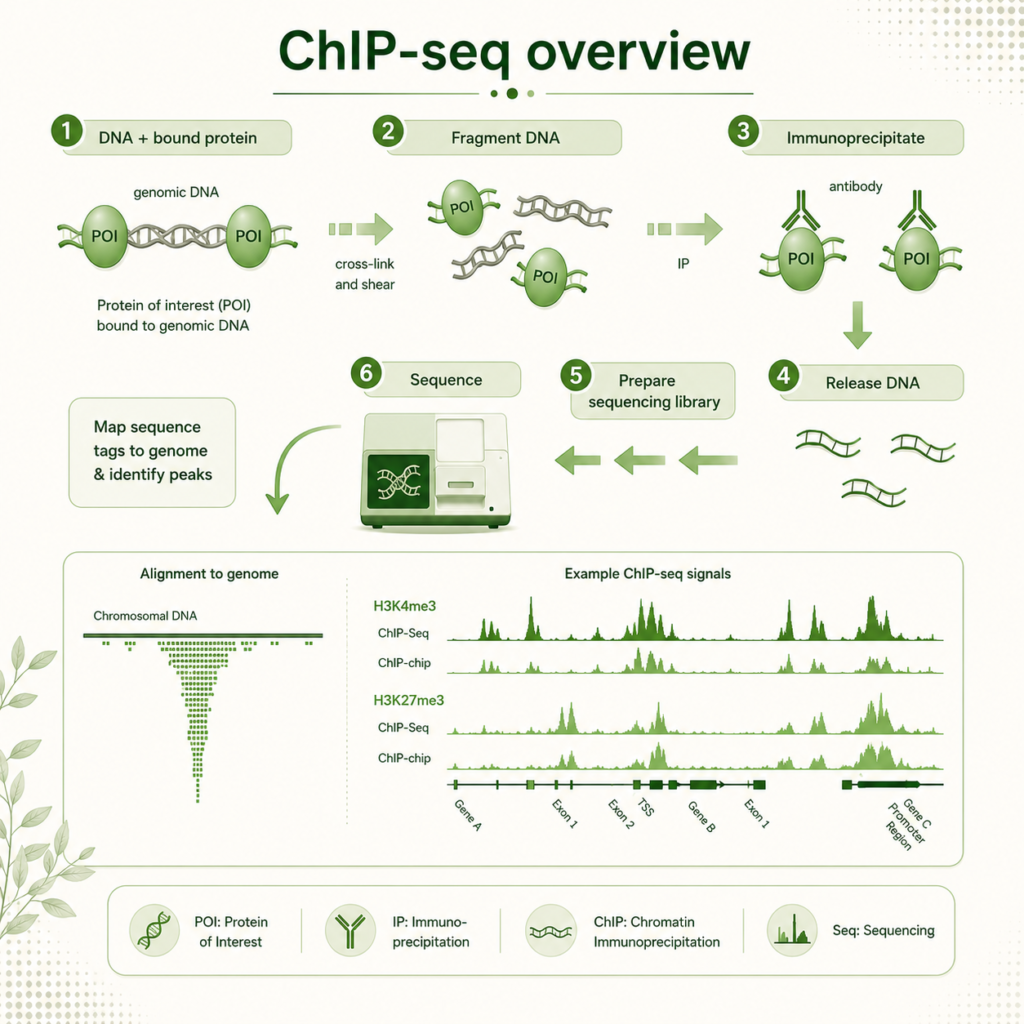
In ChIP-Seq, enriched DNA regions (protein binding sites) are detected as peaks above background reads, and bioinformatics analyses of these regions can reveal binding motifs. Applications include studies on gene regulation, transcription complex assembly, histone modification, developmental mechanisms, and disease processes.
The major steps in ChIP Sequencing are given below:
Chromatin preparation: cell fixation (cross-linking) of chromatin-bound proteins such as histones or transcription factors to DNA followed by cell lysis.
Chromatin shearing: fragmentation of chromatin by sonication down to desired fragment size (100-500 bp).
Chromatin IP: protein-DNA complexe capture using specific ChIP-seq grade antibodies against the histone or transcription factor of interest.
DNA purification: chromatin reverse cross-linking and elution followed by purification.
NGS Library Preparation: adaptor ligation and amplifcation of IP’d material.
Sequencing: Sequencing on Illumina platform, generally single-end 50bp read length is suitable for ChIP Sequencing.
Bioinformatic analysis: read filtering and trimming, read specific alignment, enrichment specific peak calling, QC metrics, multi-sample cross-comparison etc.